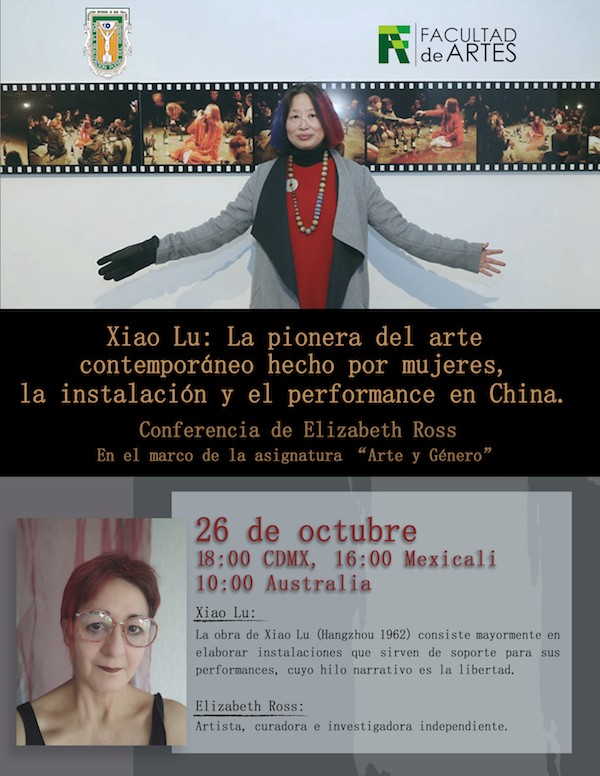
Xiao Lu:
Greetings! Thank you for your account of the shooting and your three letters. I apologise for not answering promptly. I have indeed been very busy recently, and also been unwell for a while.
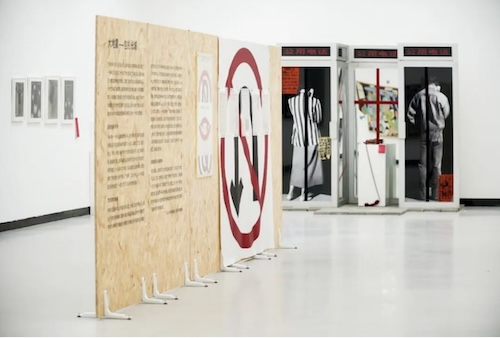
I was very happy to meet with you in December last year at 798. In fact, that day I had arranged to go and see Li Songsong’s (李松松) paintings. I had no idea that you shared a studio with him. I wasn’t too surprised when you explained the true circumstances of your firing the gun, and said that Tang Song was not one of the creators, because there are a lot of things from that historical period of the 1980s that await clarification. What did surprise me was that it was Li Songsong who had lent you the gun. From the beginning I had heard people say – and I had always believed – that it was Tang Song (唐宋) who had lent you the gun. Besides, I was very surprised that Li Songsong had kept silent about this matter for so many years. You silence is understandable. Emotion can be a reason to maintain silence about some historical distortions.
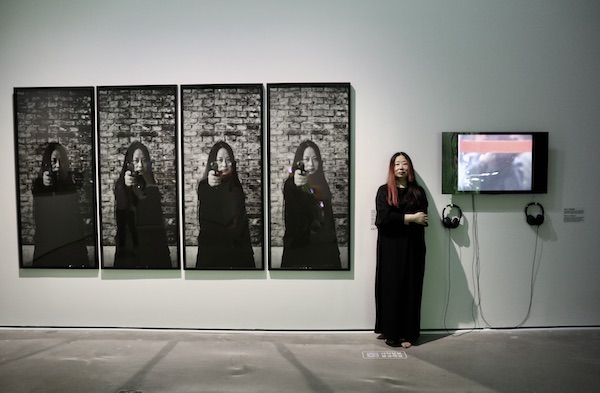
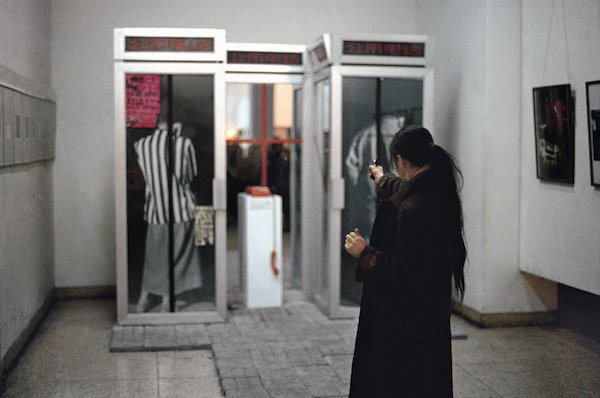
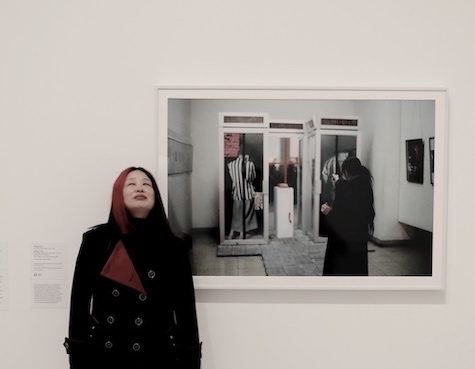
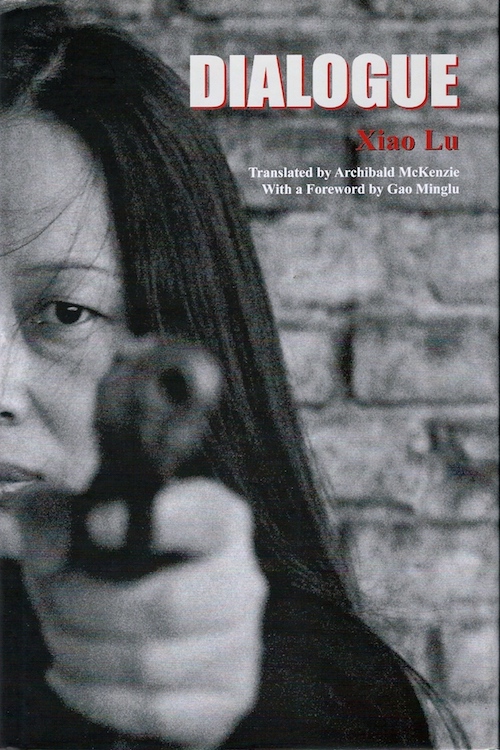
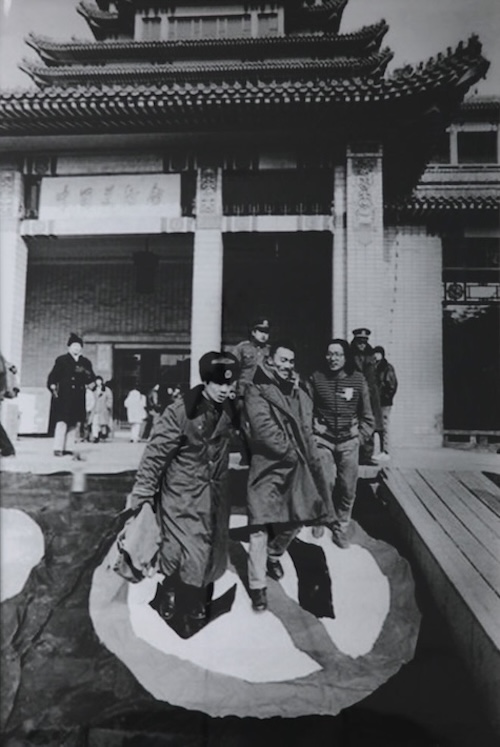
Although I was the curator of the China/Avantgarde Exhibition and had been an organiser and present during the entire preparatory work from 1986 to 1989, I was not in the know about all the incidents that occurred during the China/Avan-Garde, especially in the case of certain unannounced performance art works. In particular, I had no knowledge of, nor was part of this matter of the shooting. My description of, dealing with and response to the shooting was all written out and published by me in Trends (倾向) in the article: “Crazy 1989: the Story of the China/Avant-Grarde” (“疯狂的1989:中国现代艺术展始末”). I imagine you must also have read it. Of course, prior to the Exhibition, I knew of your work Dialogue. At the time, I was working at Art Magazine (美术), and in the 1988 edition we had published the graduation works of the graduating students of 1988 from the Zhejiang Academy of Fine Arts, including your installation work Dialogue. It was published in the issue for which Tang Qingnian (唐庆年) was the responsible editor. This is also why your work was selected for inclusion in the China/Avant-Garde. However, I had no idea that you were going to fire a gun. When you had done the shooting, and I came down from Level 3 of the Art Museum, I saw Tang Song being arrested and led away. But I didn’t see you. For the whole rest of that day, I – as being the one responsible for the Exhibition – was engaged in discussing with the police department questions about how to deal with either the closure of the exhibition or leaving it open.
Later, you came back to “surrender”, and we went with you to the police. On the day after the closing of the exhibition, we went to Dongcheng District Detention Centre to visit you and Tang Song, but you had already been released and had left. The next time I saw you and Tang Song was after the exhibition had re-opened. There was an evening conference held at the Central Academy of Fine Art with artists who were participating in the Exhibition. The two of you were outside the conference space and sent somebody in to ask me to come outside. You spoke to me for a while, but I don’t remember exactly what you said. Probably it had something to do with how to organise letting the two of you address questions in dialogue with the outside world. After that – it was two days later – at the Art Museum, you and Tang Song saw me and said you were returning to Hangzhou. Tang Song gave me an explanation of the shooting incident under the names “Xiao Lu and Tang Song”, and delegated it to me to communicate this to the public. Later I transmitted this explanation on your behalf at a seminar convened at the Art Museum. When I read the explanation from “both of you”, Wang Youshen (王友身) recorded it, verified it with me against the original text, and then published it in the third edition of Beijing Youth Daily (北京青年报). The general significance of the “Explanation” was that you both were not interested in politics, but were only interested in completing the work.
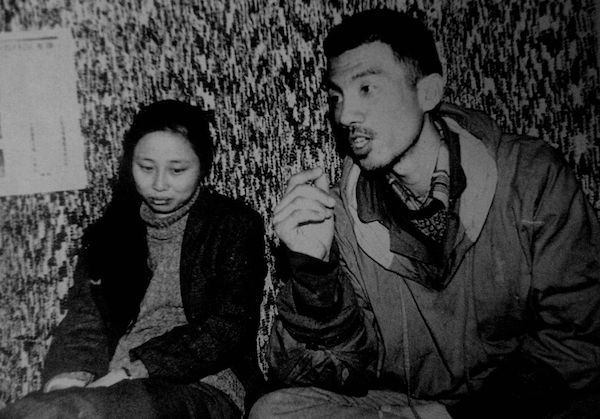
These two meetings with you left me with the impression that the work was the result of a collaboration between the two of you. To this day, I still have in my possession a large number of contemporary newspaper reports, including some of the reports in important Chinese and international newspapers and magazines dated the same day as the shooting, namely February 5, and the day after. The Chinese reports almost all have you and Tang Song as collaborators in the shooting. Some of the reports don’t list your names but simple refer to “a young woman” and “a young man”. I think this must in large measure be due to Tang Song being arrested and to your silence. I remember that both times that the two of you came to see me, it was Tang Song who was dong the talking, whereas you never said a single word. In the short space of those two brief meetings, we didn’t have the opportunity – nor perhaps the wish (neither from your side nor from mine) to sift through the detailed process of the shooting, because everybody was too steeped in an already settled “fact” in reflecting on the “meaning” and the influence of this matter. In this respect, I need to reflect on myself as main organiser of this Exhibition. At the time, I should have learned from you the true process in detail.
However, at the time I was too busy. There were too many things requiring my attention, and there was no time to verify the “historical reality”. Your appearing as a pair or a couple and that explanation also prevented me from being suspicious about your collaboration. Until 1995, I had neither discussed in public nor published anything in writing about your firing the gun. From 1996 until 1999 I was organising the exhibition Inside Out. At the opening of that exhibition in 1998, I had published a photograph of your shooting in the exhibition catalogue, giving the name of the artists as: “Xiao Lu and Tang Song”. If necessary, I can publish a correction, but I should also like very much to hear Tang Song’s version. In particular, I should like to know what his thinking was when he handed me that “Explanation of the Shooting” at the Art Museum.
I am highly supportive of your speaking out about this matter. I also very much understand why you are opening up about the true process now after 15 years. No reason justifies hiding the facts. The facts are the facts. Taking responsibility for history is the test of a person’s character. And the interpreter must be yourself, for you are the person most directly involved. Although there may be questions of individual feelings and the like involved, the true face of history is not a matter of the individual. It is a matter of China’s contemporary art in itself. Nor is this only a matter of your and Tang Song’s complex dispute about the question of authorship. It is about explaining how a moment that occurs in history may often meet with various random factors that distort the history, including the re-writing of history under the impulse of personal gain, the spin and fabrications of the media, popular rumours and so on. This is similar to what some historians say about the French Revolution: it was full of rumours.
From one point of view, your silence has been valuable, because it has caused the phenomenon of so many people collectively creating “rumours” to be fully laid bare. Your revelations about this matter today are the greatest ironical critique of this phenomenon. They also serve as a warning lesson to us who “do history”. There often appear great differences between the artwork as envisaged by the individual and its interpretation by society. Before you had fired the gun, the work was yours. It was individual in character, but when you had finished firing the gun and had shocked society, the right of interpreting it no longer belonged to you. The so-called “Shooting Incident” was a matter that arose after the shooting. Before the shooting and including the shooting in itself: this is to be considered the work, but this was not the “incident”, for, according to you, you had not considered further matters occurring after the shooting. Nor had you planned the matters that occurred after the shooting. You had only considered questions concerning the integrity of your work in itself. The “Incident” involved many creators, including Tang Song, but according to your account, you are the creator of the work, and he is not.
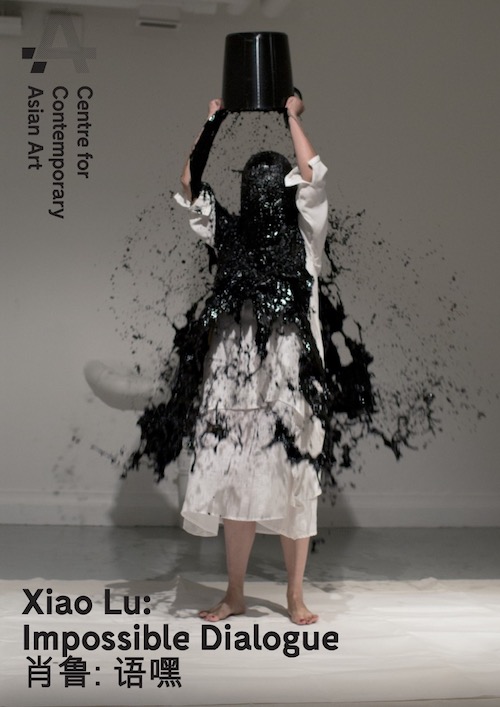
I understand how as a female artist, you might sacrifice credit for the sake of your reputation. As you say in your letter, this matter is also a story about feminism. More particularly, a story about being female in China. I fully understand your point that as a woman in China, you may even better understand the essence of the creation of history. We can talk about this question again later.
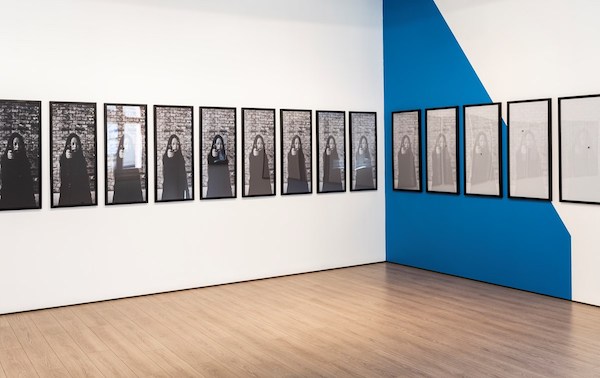
For now, I write this much. You said that you were exhibiting your Dialogue in the 798 art space on the 24th of this month. I cannot be back in time for that, but I wish you success.
Attachment: [originally in English by Gao Minglu]
Hi,Xiaolu:
Please find the attached my letter. You can put it into Tom web along with your letters to me. Or if you want, I can send my letter and yours togather to Wu Hong. Hope your exhibit get success.
Gao Minglu
16 April, 2004
Translation from Chinese by Archibald McKenzie